
Public Health Narrative Roadmap
Preparing for the journey
Narrative is an emerging and ever-evolving public health tool. Resources from the University of Wisconsin Population Health Institute’s (UWPHI) Public Health Infrastructure Grant (PHIG) team and the Wisconsin Department of Health Services (DHS) Office of Policy and Practice Alignment (OPPA) can help you implement narrative into your work.
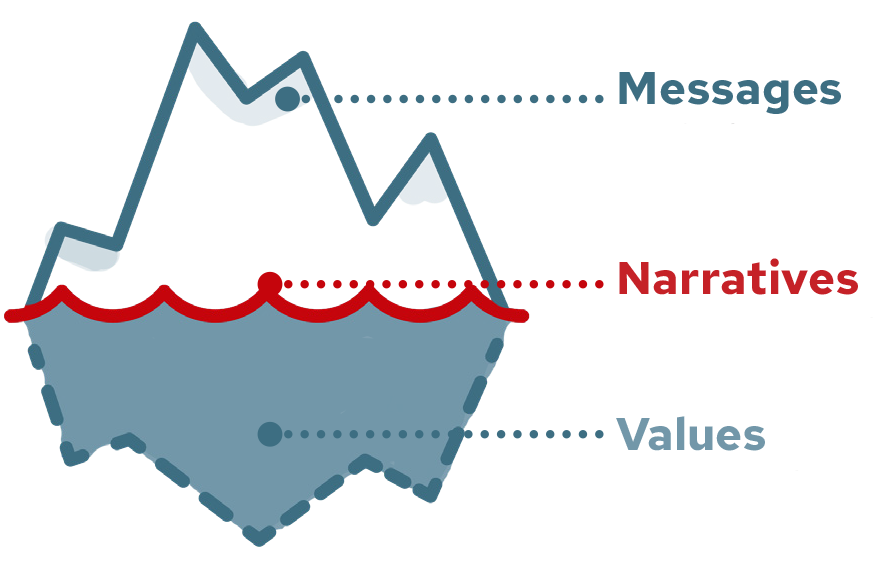
When we talk about narrative, we can differentiate three “levels” of experience—values, messages, and narratives.
- Messages are observable via our senses in the world around us.
Examples of messages would be conversation, writing an email, listening to a speech, or a stop sign at an intersection. - Values are the deep, invisible worldviews and mindsets that come from both individual experiences and shared culture. They are usually outside our conscious awareness — in our heads and in our actions. Values dictate what and who is important.
- Narratives are large, overarching stories, stories about stories,
meta-stories. Narratives are the mediators between these two distinct realms — the realm of messages and direct experience (representations in the world) and the invisible realm of values and worldviews.

What does narrative do in public health?
Provides a foundation for ALL content areas—not just communications.
Makes values more explicit.

Taps into shared values to move work forward—particularly in times of increased polarization.
Shapes possible actions and interventions.
Getting Started
The UWPHI Public Health Infrastructure Grant (PHIG) team and the DHS Office of Policy and Practice Alignment (OPPA) share many partners statewide, but our audiences and approaches to the work differ slightly. Both programs have a distinct theory of change. Review the visualizations below to see the similarities and differences.
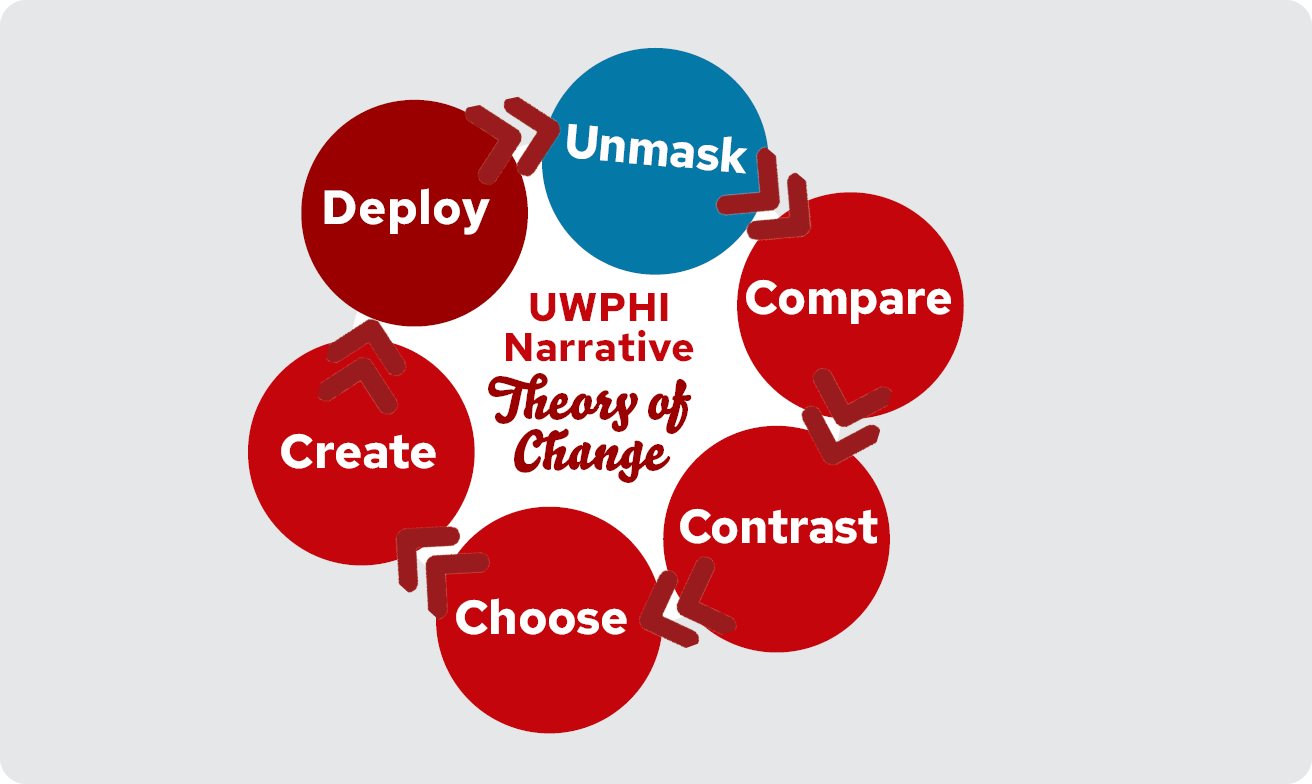
UW Population Health Institute PHIG
The UWPHI PHIG team partners with local and Tribal health departments, as well as non-governmental organizations.
Narrative Theory of Change:
- Unmask and/or name dominant narrative
- Compare narratives available
- Contrast available narratives by investigating elevated values
- Create new messages aligned with chosen values using transformative narratives
- Choose to use narrative aligned with chosen values
- Deploy new, transformed narratives via trusted channels and partnerships
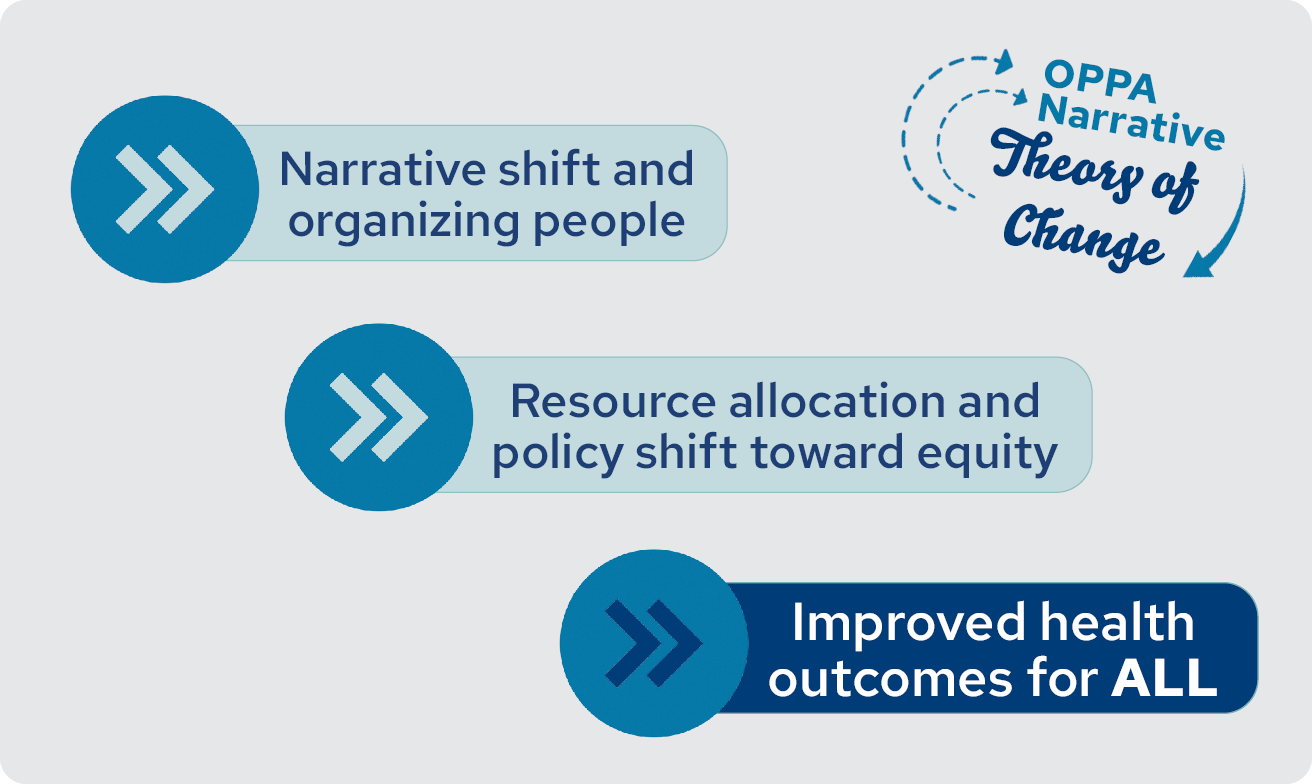
Wisconsin Department of Health Services OPPA
The DHS Office of Policy and Practice alignment trains local and Tribal public health departments. Implementation of the Wisconsin State Health Improvement Plan (SHIP) also includes other state agencies and community and academic partners.
Narrative Theory of Change
We believe that if:
- narrative shifts, public discourse is reframed and focuses on what conditions truly create health;
- resource allocation is equitable and focuses on community needs and priorities;
- partnerships and community power are harvested to advance policies, systems and environmental change to support healthy community conditions, behaviors and outcomes;
We can collectively achieve better health for ALL Wisconsinites.
Narrative 101: Foundations
On the first leg of our journey, we’re laying the foundations of the narrative by highlighting definitions and key concepts. Explore the resources currently available from UWPHI and the Wisconsin Department of Health Services.
UWPHI PHIG’s Narrative Toolkit
This resource outlines narrative concepts in public health in Wisconsin, including dominant and transformative narratives.
Who is this for? Anyone who wants a brief overview of foundational narrative content.
UWPHI Narrative Series – Modules 1 & 2
The Narratives in Wisconsin Public Health asynchronous learning series combines recorded didactic content with skill-building activities. Modules 1 and 2 provide a strong foundation of key terms and narrative change. These modules were designed to be completed within 2 hours.
Who are they for? Anyone who wants self-paced narrative training they can complete individually or with a group at a time convenient for them. These can be used in team meetings or as an onboarding training.
Wisconsin Commercial Tobacco Prevention and Treatment Program (CTPTP) Narrative 101
This 60-minute virtual training recording covers foundational narrative content and its applications in the prevention and treatment space.
Who is this for? Anyone who wants a virtual narrative training that they can use at their convenience. This would be a great resource to use before participating in an OPPA Narrative 101 session.
OPPA Narrative 101
This three-hour, in-person training was co-developed by local and Tribal health departments and the Office of Policy and Practice Alignment (OPPA). With special attention given to finding common ground through shared values, participants will gain an introductory understanding of how to put narrative into practice in their everyday work settings.
Who is this for? Local and Tribal health department staff and community partners (e.g., CHIP coalition members) are welcome.
Considerations
Choose the resource that best fits your needs and capacity. Together we offer everything from a handout to a three-hour in-person training.
UWPHI PHIG emphasizes a deeper conceptual understanding of narrative work, while DHS OPPA focuses on more practical application within the context of local and Tribal health departments.
Both 101s have distinct content. Doing both isn’t duplicative; in fact, they are complementary. If you have the time and capacity to do both, we suggest you do so.
Narrative 201: Theory to Practice
Now that we understand the basics, it’s time to explore how narrative is put into action in public health. Here we provide training on more advanced narrative topics and examples of narrative implementation in our own work.

UWPHI Narrative Series – Module 3
Designed to be completed within two hours, this module focuses on a case study of the narrative around school policy on youth e-cigarette use.
Who is this for? Anyone who wants self-paced narrative training they can complete individually or with a group at a time convenient for them. These can be used in team meetings or as an onboarding training.
CTPTP Narrative 201
This webinar examines ways that narrative informs commercial tobacco enforcement policy and how it can influence values-based policy decisions. This session focuses on building a robust, individualized narrative toolkit that anyone can use to guide their work.
Who is this for? Anyone who understands narrative basics and wants to explore what narrative implementation looks like.
Prerequisite: CTPTP Narrative 101
OPPA Narrative 201
This workshop supports local staff in developing effective strategies to advance one area of their work. It is a three-hour in-person or virtual session in which participants use narrative and data, along with advocacy and communication strategies, to develop an action plan. Contact Kirsten Gundersen to learn more.
Who is this for? Local and Tribal health department staff; community partners (e.g. CHIP coalition members) are welcome.
Prerequisite: OPPA Narrative 101
Narrative Work in Action
Explore the examples below to see how narrative is implemented in public health resources and communications.

DHS Commercial Tobacco Prevention and Treatment Program
Equitable Commercial Tobacco Enforcement Messaging
Narrative foundations, sample message map and language relevant to supportive approaches to tobacco control, and policy language applications.

DHS Commercial Tobacco Prevention and Treatment Program
Narrative Reframing of Alternatives to Suspension in Schools
Message and resource map created to help local prevention coordinators address frequent requests from school personnel about student tobacco use.
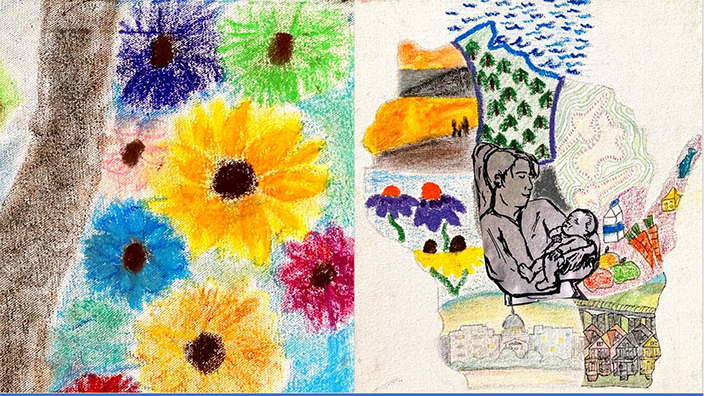
Wisconsin State Health Improvement Plan (SHIP)
We understand the basics; we’ve seen some case studies and examples of narrative in action. Now let’s take a little detour on the journey by looking at the SHIP through a narrative lens. Bon voyage!
SHIP is a lever that can open opportunities to shift current narratives through data, storytelling, policy interventions, and other strategies.
Narrative 301: Masterclasses and Tailored TTA
We’re in the homestretch of our narrative journey now!
After getting familiar with the basics, reviewing examples and case studies, and diving deep into Wisconsin’s SHIP, we’re ready to take on advanced narrative content and receive individualized training and technical assistance.
Training Resources
Narratives for Health
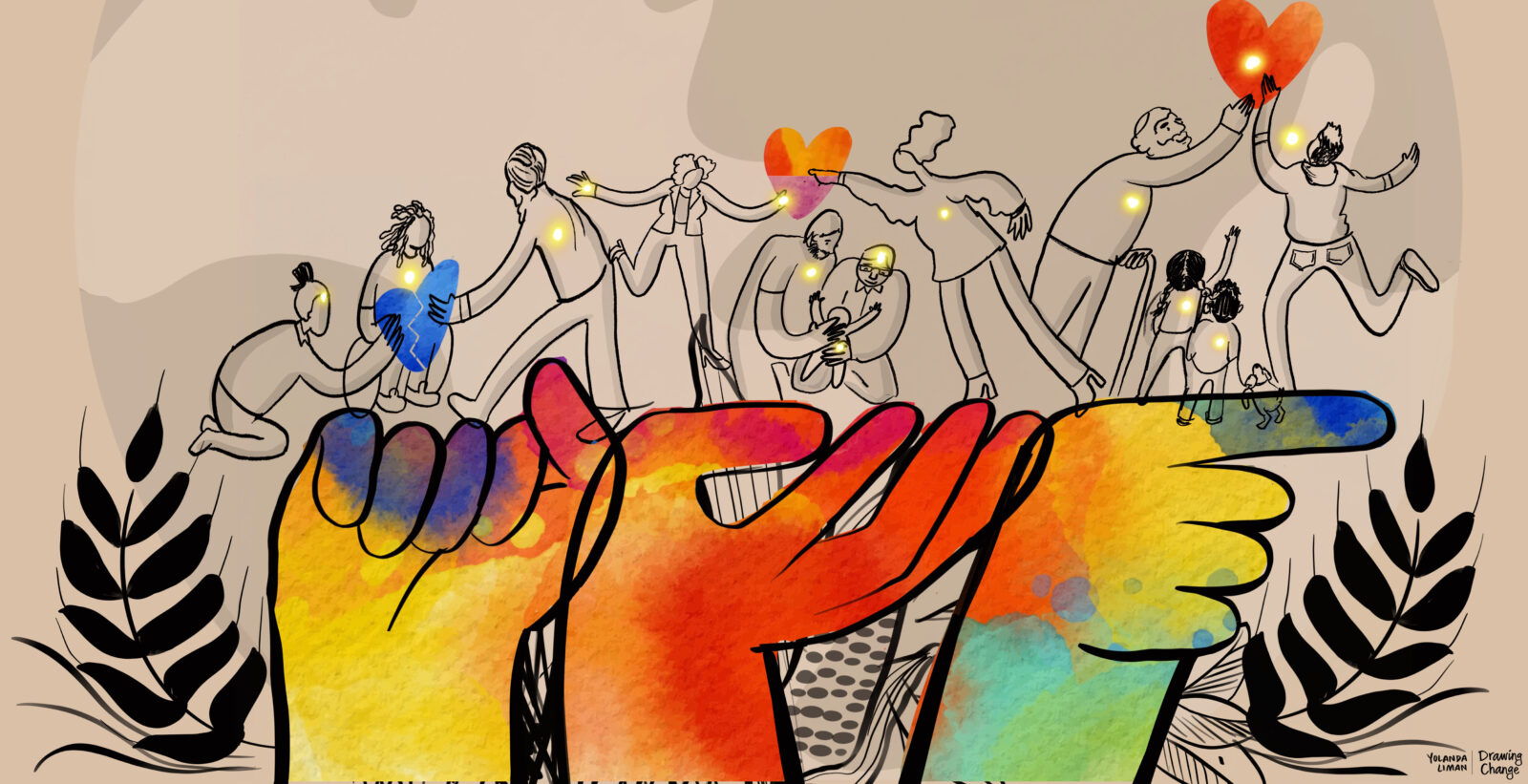
These cohorts are designed to be an immersive, engagement-driven narrative experience. Participants engage deeply with one another, lean into aspirational thinking, and explore their own stories in relation to their work and lives. Topics include foundational knowledge, the relationship between narrative and power, and narrative as a tool for organizing. (9 hours, split into three sessions)
Training Resources

Tailored Training and Technical Assistance
The UWPHI Training and Learning team also offers free, tailored training and technical assistance (TTA) to local and Tribal health departments on a range of topics, including training about understanding and implementing narrative.
Review the full descriptions of our current offerings below and/or reach out for additional support.
Don’t see what you’re looking for?
How does narrative boost the Foundational Capabilities?
The Narrative Roadmap advances the Foundational Public Health Services (FPHS) by building the skills, strategies, and organizational capacity needed to improve public health outcomes. The Roadmap demonstrates how narrative serves as a cross-cutting strategy that strengthens all Foundational Capabilities by helping public health professionals connect data, values, community priorities, and systems change efforts.
The Roadmap builds the capacity needed to advance effective public health practice and improve health outcomes across Wisconsin. Read below to learn more about how the Narrative Roadmap aligns with each Foundational Capability.
Translates data into meaningful stories that connect community health findings to shared values and priorities, supporting CHA and CHIP efforts.
Strengthens trusted communication channels and relationship-building that support effective risk communication and public trust during emergencies.
Builds skills in message framing, narrative development, audience engagement, trust-building, and strategic communication.
Demonstrates how narratives influence public discourse, policy priorities, resource allocation, and systems change.
Centers relationship-building, shared values, community voice, and cross-sector collaboration and partnerships.
Develops workforce capacity through training, technical assistance, tools, and skill-building opportunities.
Encourages alignment between organizational values, goals, actions, and continuous improvement efforts.
Examines dominant and transformative narratives, promotes equitable resource allocation, and elevates community perspectives.
Helps practitioners understand how narratives shape systems, power, decision-making, and opportunities for sustainable change.